Understanding Angles for 11 Plus Maths
21 October 2026

What angle questions look like in the 11 plus
In 11 plus maths exams, children are not allowed to use a protractor. All angle questions are solved using calculation, not measuring. Diagrams are often not drawn to scale, so it is important to focus on the numbers and labels given rather than guessing by eye.

Key insight: Learn the angle rules
Most questions rely on a few key facts. Angles on a straight line add up to 180 degrees. Angles around a point add up to 360 degrees. Angles in a triangle add up to 180 degrees. Angles in a quadrilateral add up to 360 degrees. Vertically opposite angles are equal. Knowing these facts helps your child answer almost any angle question in the test.
Worked example
A triangle has two angles labelled 35° and 55°. What is the size of the third angle?
First, recall that the angles in a triangle add up to 180°.
Add the two known angles: 35 + 55 = 90.
Subtract this total from 180 to find the missing angle: 180 - 90 = 90.
The correct answer is 90°.

Helping your child practise
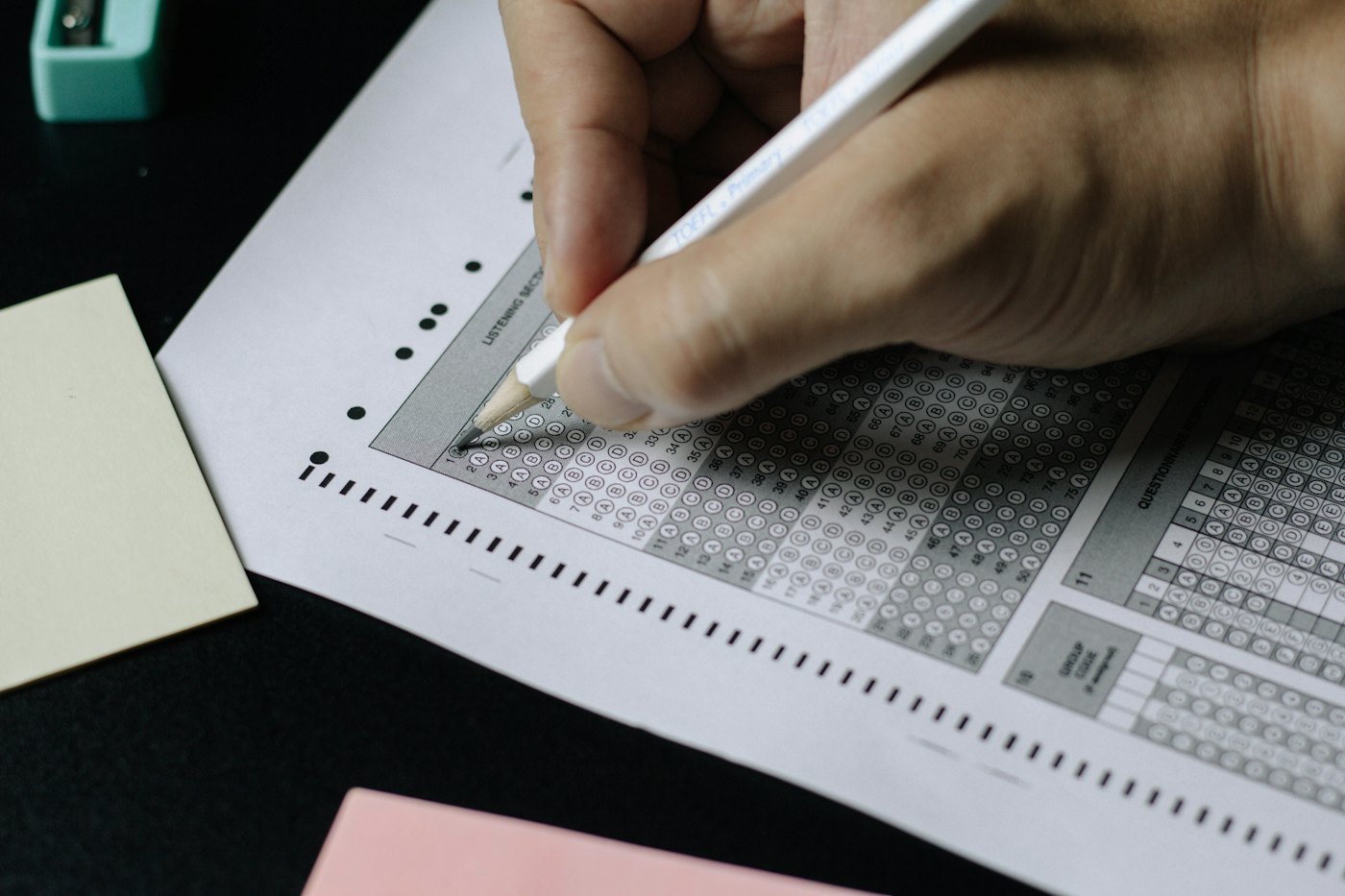
Encourage your child to write down the rule they are using for each question. Remind them never to guess by looking at the diagram. Instead, they should read the labels, apply the correct rule, and calculate step by step.
Building confidence with angle facts
Practising a variety of angle questions using these rules will help your child feel more confident. Start with triangles and straight lines, then move on to quadrilaterals and angles around a point. Use simple numbers at first before trying harder examples.